Author: admin

  • Training Sniffing Dogs

    Training Sniffing Dogs

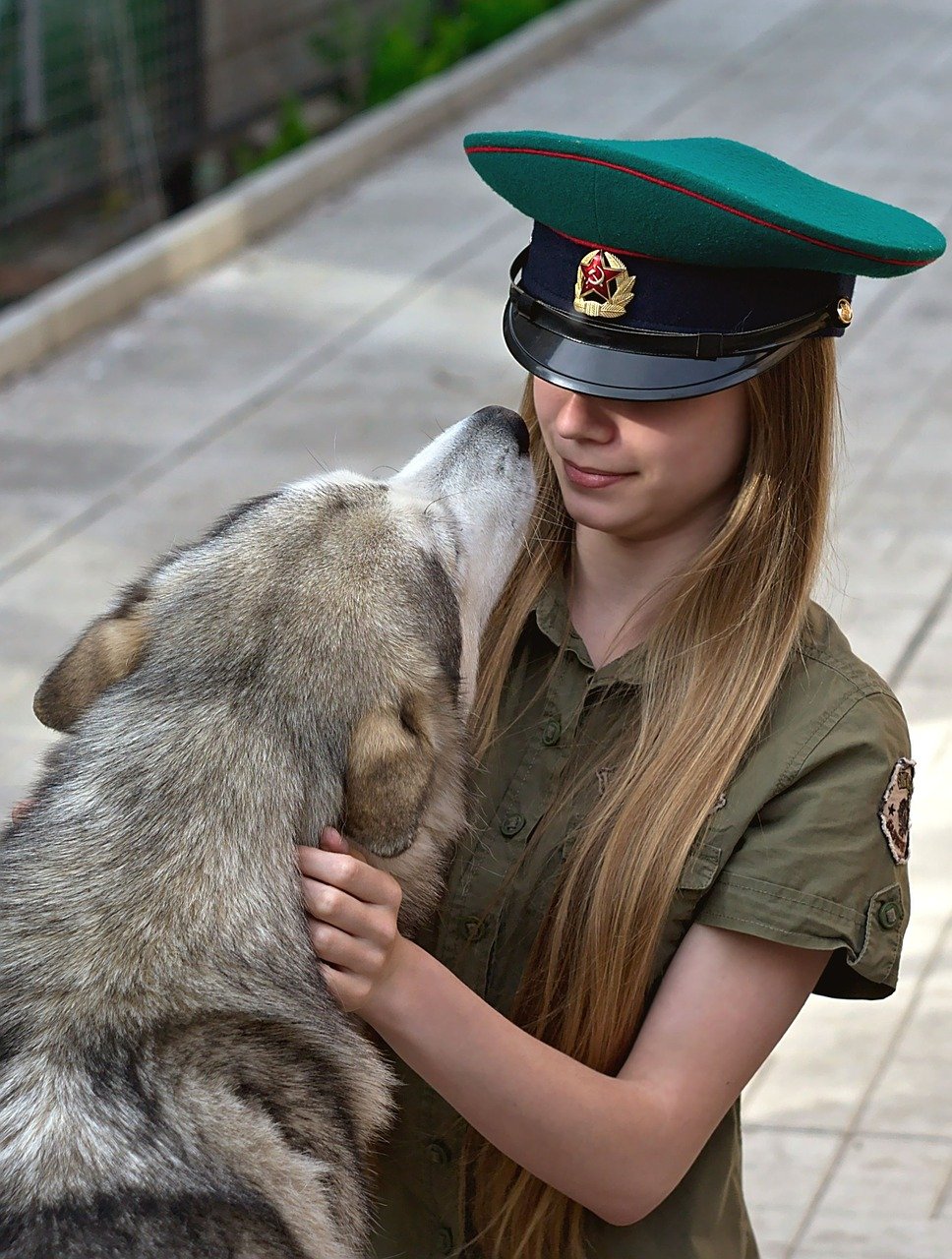
    Do you ever wonder how dogs find criminals in a passenger ship? It’s simple: by sniffing. They are called detection or sniffer dogs. Trained to detect people and substances, through their senses, such as explosives, illegal drugs and blood; almost always the sense of smell, which is two thousand times much stronger, and fifty times more sensitive than that of a human’s. In addition to sensitivity, a dog’s sense of smell is pricky.

    It can discern a specific scent; meaning it can recognize cheese in a fish and vegetable market thousand miles away from where it is standing. Hunting dogs that search for game and search dog that search for missing humans are generally not considered dogs. However, there is some confusion with cadaver dogs, only trained to detect human remains.

    As to not make a fuss, they are taught to learn two kinds of alerting: the passive and the aggressive. Drug dogs use an aggressive alert, where they dig and paw at the spot where the smell the dugs. On the other hand, there are some cases where this kind of alert would be bad news. Placed in a situation where bombs are included, scratching can be very disastrous. In these cases, a passive alert is used.

    A good example for this type are the beagles used by the Department of Agriculture where the dogs are trained to sniff out produces that are not allowed to enter the country. The Beagle Brigade, as how they are called, sniffs people’s luggage while they wait in lines at airports and border crossings. In other countries, some also are used in emergency search actions. Because no one wants a dog digging in their belongings, the USDA beagles have been trained to simply sit down when they are able to smell it.

    Trainers have come up with a strategy for dogs employed to sniff out drugs. On odd cases, they seem to eat them when they have found the illegal substance. Is it because they are addicted to those drugs themselves? In fact, the dogs have absolutely no interest in drugs. What they are actually looking for is their favorite toy. In an article found in discovery.com, the “toys” that are mostly often used are white towels. Since dogs love to play this vigorous game of tug-of-war, they have generated the “White Towel Game” idea.

    To begin the training, the handler simply plays with the dog using a towel, which has been washed carefully to appear null and without scent for the trainee. Later, a bag of marijuana, for instance, is rolled up inside the towel.

    After playing for a while, the dogs starts to recognize the smell of the drug as the smell of his favorite toy. The handler then hides the towel, with the drug, in various places. Whenever the dog sniffs out the drugs, he digs and scratches, trying to get his toy. He soon comes to learn that if he sniffs out the smell of drugs, as soon as he finds them, he’ll be rewarded with a game of tug-of-war.

    As training progresses, different drugs are placed in the towel, until the dog is able to sniff out a host of illegal substances. The same method is used for bomb-detection dogs, except various chemicals used to manufacture explosives are placed in the towel instead of drugs.
  • Training Dog Obedience Using Hand Signals

    Training Dog Obedience Using Hand Signals

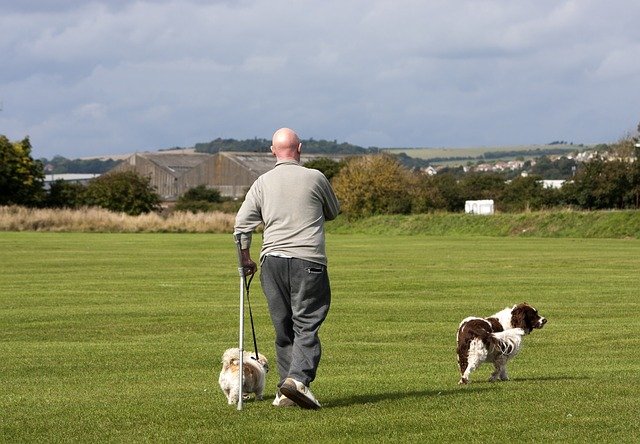
    Are you doing some dog obedience training to fix your dog’s behavior problems? If you are, then you must use hand signals in addition to verbal commands that you want your pet to follow. The hand signals work most of the time, especially when your pet cannot hear you. Actually, these are more effective ways to ensure your dog pays close attention to you even from a couple of meters away, as long as it can see you.

    And these are what trainers of agility dogs and hunting dogs use to control the actions of these dogs while in the field. By using the right hand signals during dog training, they can make the dogs turn left or right, go fast, stop, or stay put. Now, you can also do these to your pet without using verbal commands. Learn these first three hand signals and teach them to your dog while doing dog obedience training.

    1. For the “sit” command, here’s the hand signal: bend your arm upwards at the elbow and then raise your hand with fist closed up to your head’s side while you command your dog to sit simultaneously. Keep on doing these hand movements while commanding your dog to sit. Later on, your pet will soon learn how to associate the hand signal with your vocal command. Now, if you are not able to get your dog’s attention the first time you try the hand signal, don’t punish it. Instead, keep trying or better yet, make sure you have a leash in your left hand.

    2. For the “down” command, the hand signal is just like when you are asking someone to sit down at the same time saying, “Have a seat.” To teach your dog the hand signal for down, you need to hold your arm out towards your pet and then lower your hand, on which your palm faces down towards the floor. While doing this, give the “down” command, and your dog will follow your hand signal into the down position. Just like in the sit hand signal, keep repeating this until your dog learns to associate the lowering of your hand towards the floor as part of the “down” command.

    3. For the “stay” command, first, put your dog into the sit or down position. Afterwards, hold out your arm towards your pet, with your palm’s position similar to that of a policeman who’s using hand signal to stop traffic. And just like in the previous two commands, do this at the same time command your dog to “stay”, with your firm tone of voice. If at first, your dog does not follow, try it again until he recognizes that hand signal means “down”.

    Using hand signals can really do a lot when training your dog. Although you may find it difficult to make your dog obey at first, don’t give up, but instead keep repeating the signals until it understands what you are trying to communicate. Take note that if you are consistent and thorough in showing your pet those hand signals, the faster it will respond.

  • Tips For Dog Obedience Training

    Tips For Dog Obedience Training

    If you keep a dog either for sporting, competing, or simply for leisure, you probably know how significant it is to have him go through dog obedience training. A pet dog that is well behaved is always pleasurable to take along because he is less likely to go wild and cause troubles to other people. You surely don’t want to tag along a dog that barks at everyone and run around therefore scaring away the crowd. If good manners are very important in your home, the same things should also be taught to your pet.

    Sure enough, keeping dogs at home should provide your loved ones with enough security and not that they will cause harm on anyone. You will not also like it when your neighbors complain that your pet has ransacked their properties or worse, have bitten someone in the area. Therefore, the more that you should pay attention to having your dog trained properly.

    Are you planning to train your dog by yourself? Here are the steps that you need to take note of in dog obedience training. But remember; don’t ever move to the next step when your pet has not yet mastered the previous one!

    The difficulty of the commands start from the basics to the most advanced. For starters, teach your pet the easiest instructions first. These are “sit”, “stand”, “stop”, “come”, and the likes. Be sure that he is able to learn all of these before starting with a new set. Always use these commands so he will be able to remember them.

    Keep in mind your dog’s genetic makeup. Some breeds have their specializations so you must concentrate on harnessing their skills and capabilities.

    Take note of the duration of time when teaching a new command. Don’t bombard your dog with several commands all at the same time. Also make sure that you use the praise or reward and punishment method. Your voice should likewise sound positive when giving praises and be unyielding when there is a need to reprimand him.

    Ensure that your dog is physically comfortable as the training exercises are performed. Dogs get tired easily so don’t strain him that much.

    Execute the dog obedience training sessions in a distraction-free area. As the response turns positive, gradually add more distractions like bouncing balls, doing the jumping jack, running around, throwing treats to him, and many others. But don’t overdo the use of distractions as it may frighten your pet.

    Practice giving commands in a variety of surfaces. Some of these include the cement sidewalks, on sand, on dirt, on the grass-covered lawns, on a chair or table, low wall, logs, and many others.

    Give commands while you are walking down the street, while you are in the pet supply outlet, or wherever you may be with your dog.

    There is actually no best time of the day to administer the dog obedience training sessions. What matters is that both you and your dog should be up to it, in the mood, and in good physical condition.

  • Things You Should Learn About Dog Obedience Training

    Things You Should Learn About Dog Obedience Training

    As pets, dogs are not only meant to be confined at home. There are chances when you have to take them out for a walk or bring them to any destination. Even more, the dog needs to learn the proper behavior despite being kept at home. Socializing is one skill that he has to be trained with. Thus, let him undergo dog obedience training.

    You see, all of your family members should feel safe and at ease with your pet. There are dogs that seem to be agitated and such behavior can definitely threaten your family’s safety. While training him may be quite a daunting task, you will realize that it will be all worth it. Sooner or later, you will appreciate your efforts.

    The Real Scope of Dog Training

    Obedience training is composed of several areas. It ranges from the simplest one up to the most advance instructions for your dog. The basics often include the simple commands that should make your dog respond. Included are come, sit, stand, roll over, stay, down, and the likes. The advance training includes giving directions for fetching something and many others. There are techniques used as well like positive reinforcement, clicker training, collar and leash, and the rewards given for any positive and likeable behavior.

    Dog obedience is a training that is often recommended for the wild and unruly animals. But in your case, a new pet will be more in his best foot if given the proper training.

    The Importance of Obedience Training

    As a dog owner, you should understand the significance of training your pet to obey. A trained dog is very suitable to bring around friends and other people without fear of attacking anyone. It is then like tagging along a well-behaved human being. You don’t like your dog to be misbehaving and causing nuisance, right? Therefore, allow him to absorb a kind of mentality that emphasizes the need to act accordingly in different situations.

    Dog Obedience Training by Yourself

    Although professionals are more into this thing, it will be a rewarding experience for you and your dog if the training is conducted personally. The training sessions will not only serve as educational but also suffice for your bonding moments. Doing so will establish a closer bond between the two of you.

    Training your dog calls for more patience on your part. It will be hard on your dog’s part to process your commands and will take time to execute them. There will be moments when you feel like giving up and snapping but don’t punish your dog without any reason. This may agitate him. Keep in mind that your dog needs to adjust and learning doesn’t happen overnight.

    Positive reinforcements are likewise very essential. They will boost your dog to do better. It will speed up his learning process too.

    Dog obedience training is therefore a very important thing to attend to. So, enjoy the moments with your pet the way he will enjoy his time with you.

  • The Importance Of Using Dog Obedience Games In Dog Training

    The Importance Of Using Dog Obedience Games In Dog Training

    While many dog owners rely on dog trainers and dog obedience schools to help turn their dogs into well-trained pets, there are a few who found simpler means to make their dogs obey what they want them to do. One of which is by using dog obedience games. These are actually very effective in fixing some dog behavior problems, unlike when an owner uses punishment just to make his/her pet behave.

    Now, you might think, “How can it be possible that a game can be used to keep a dog in line?” If you are a parent now, for sure you’ve already seen how games can help your kids learn a lot of things. So, don’t you think it’s just wise to also use games to train your pet? Still not convinced? Here are two very important reasons why you should use dog obedience games in dog training.

    The first reason is that dog obedience games make great activities for your pet, keeping it occupied. Think about this: if there is nothing for your pet to do, what can you expect? Of course, in just a minute or so, you might find it inside or outside your home, creating a complete mess or doing something really naughty like peeing or chewing on your shoes and slippers. But if you spend the time playing dog obedience games with your pet, the less likely these things will happen. Not only that, you should also keep in mind that tired dogs cannot create any trouble. So, how to tire them? Let them play games. Try this step and you’ll see that when your dog is tired, it is not able to get into things to tear up and create a mess.

    Now for the second reason, well this one is quite obvious: playing dog obedience games with your pet is fun, actually even more fun than any kind of serious dog training. Try to compare enrolling your dog in a dog training that is solely geared towards making it obey commands like “sit”, “stay”, and “down” with a dog training using dog obedience games. You will notice that your pet is more interested and that its attention span becomes longer. Why? Because the dog games allow it to play, learn, and have fun, all at the same time. But actually, it’s not only your dog that will have fun doing this. Allot some time to spend playing these games with your pet and you will see yourself having fun too.

    These are the two main reasons why dog obedience games are important components of your dog training. Isn’t it amazing how games, just like in kids, can make your pet behave and learn a lot of things? So, why have second thoughts about integrating these in your dog training?

    Now, if you want to know what kinds of games are appropriate for your pet, you can always do your search online. Or better read more articles about dog obedience training and games via the Internet.

  • Significant Information About Dog Obedience Training

    Significant Information About Dog Obedience Training

    A dog is one of the most amazing pets to have. Actually, it’s even considered as man’s best friend. Owning one has a lot of benefits. It does not only help guard one’s house but also makes a great companion. Even those couples that don’t have a child yet consider having a dog as their companion for the time being. A dog is just like a human being, and sometimes even better. It offers affection, enjoyment, and so much fun.

    But since a dog is still an animal, most of the time it will still act like an animal, unless the owner allows it to have a dog obedience training of some sort. Now, if you happen to have a dog, are you also considering about getting it trained? If you are, this article will give you significant information about dog obedience training.

    First off, you might wonder what dog obedience training is and what it is all about. Well, it is a technique on which a dog trainer helps you train your dog by imposing yourself as its boss. Actually sometimes, you can even do the training yourself, as long as you have the knowledge about the basic dog commands. But to be certain about getting effective results, you can always rely on a dog trainer to assist you on this.

    Moving on, there are several dog obedience training techniques that can be used to make your pet a well-behaved one. These include the collar or leash training and the reward training. Although the approaches of these two are different, both are bound to set a common language on which you and your pet will understand.

    The collar or leash dog obedience training is said to be the harder technique. Because of this, it is less popular to dog owners these days. However, for some breeds of dogs, this is found to be more effective than the rewarding type of training. As its name implies, a collar or leash serves as the way to communicate to a dog in the collar or leash dog obedience training. To have control over your pet, the collar or leash technique have multiple degrees, which can be from soft pulls of the leash or collar to stronger ones. This way, you are able to show your pet that you are the one handling the situation and that you are the leader.

    Meanwhile, on the reward dog obedience training, instead of using leash or collar, reward is used to teach a few common commands to your dog. Once your pet is able to follow what you are trying to command it to do, you give reward such as a treat. However, a reward does not necessarily consist of treats alone. You can also use verbal praises like “Good boy, or good dog!” if it follows your command and behaves accordingly.

    Now, upon learning about this dog obedience training information, are you all set to sign up for a dog obedience class? Remember, you will not be doing this for your pet alone, but also for you as its owner. So make sure that you choose the right dog obedience training technique for you and your pet.